
Practical guide
Choose a useful message hierarchy for a work vehicle
Give the business name, service and contact route a clear order before filling the design with detail.
Read the guide: Choose a useful message hierarchy for a work vehicleChicago commercial vehicles & fleets
Turn what your company does into a clear commercial vehicle introduction. Put the useful message first and choose coverage around it.
Guaranteed response within 2 hours.Free planning tools and buyer downloads below.
A clear scope before the spend.
Free vehicle message hierarchy builder below. Use the result with any wrap shop.
More useful project detail
Choose the words that matter, assign them to useful views and give the designer a clear order to work with.

A visual you can keep
Decide what matters before the design tries to say everything.
Use the planning example from Chicago Fleet Wraps, download a copy, or read the related project guides.
Practical guide
Give the business name, service and contact route a clear order before filling the design with detail.
Read the guide: Choose a useful message hierarchy for a work vehiclePractical guide
Review the side, rear and working-door positions without copying the same crowded block everywhere.
Read the guide: Assign a message purpose to each vehicle viewPractical guide
Use a structured edit to remove competing details without losing the information customers need.
Read the guide: Simplify a crowded commercial wrap briefWhy put your business on a vehicle?
Give customers a recognizable business vehicle when you arrive at their door or job site.
Use a clear name, a focused service message and a contact route people can find.
Compare lettering, partial graphics and full wraps against your vehicle, message and budget.
Picture the possibilities
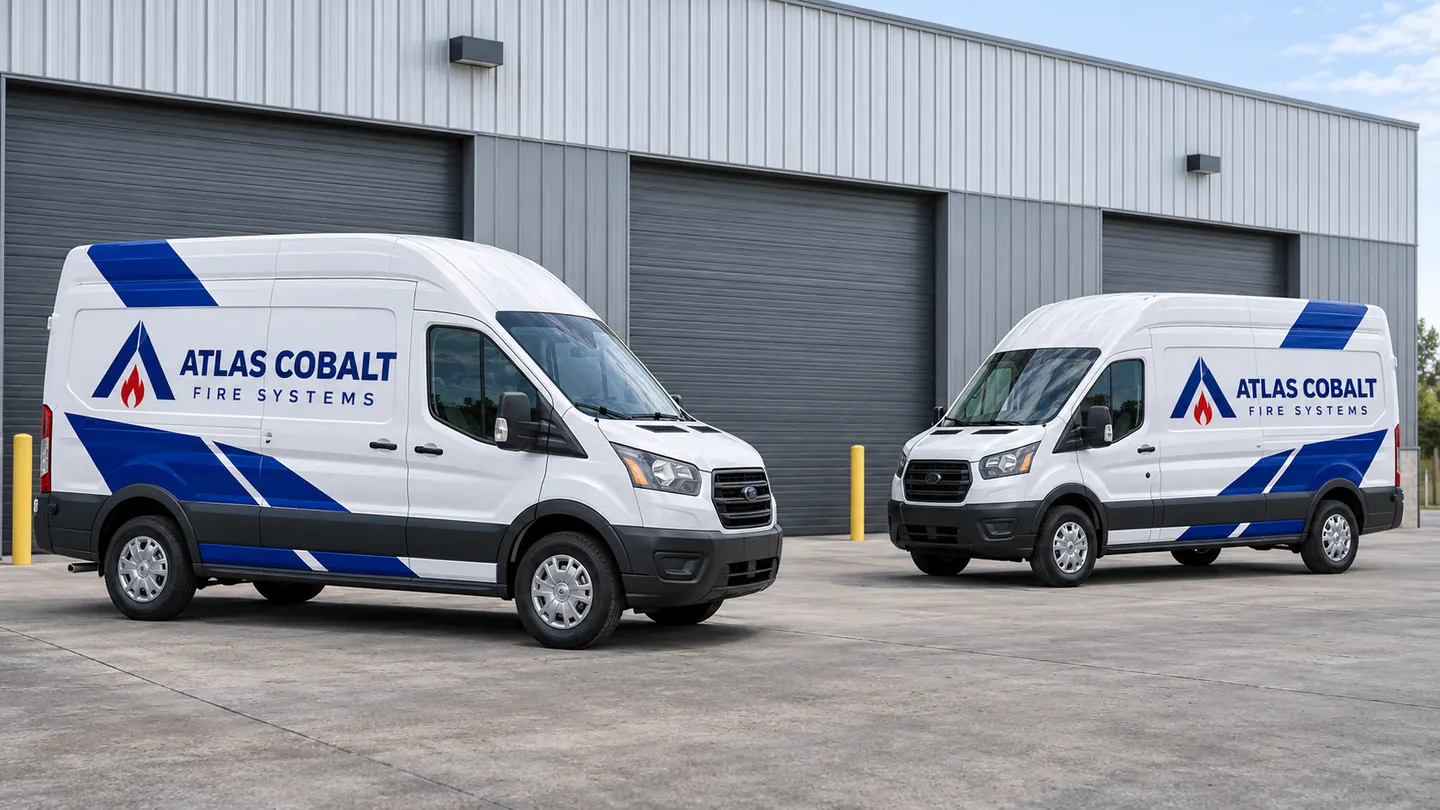
Look at the message, the coverage and the working views.
Atlas Cobalt Fire Systems is a fictional business. These generated design concepts illustrate ideas to discuss for your vehicles.
Plan the graphics for your vehiclesA clear scope before a price
Vehicle size, covered areas, artwork, preparation, existing graphics and the proposed material system all belong in the price discussion.
Useful when the priority is a clear name, service and contact route.
Discuss this scopeCompare the exact panels, message and finish with the full-coverage option.
Discuss this scopeConfirm the included painted panels and any exclusions on the actual vehicle.
Discuss this scopeRequest a price for the actual vehicles and agreed coverage. The free tools below help you compare the assumptions.
Let’s talk vehicles
Tell us how many vehicles you have. We’ll follow up about the vehicles, coverage, design and timing.
Guaranteed response within 2 hours.Know the next step
Guaranteed response within 2 hours. Final project pricing and dates follow review of the scope.
Name, email, phone and vehicle count. Share the project context through the free tool if it is useful.
Discuss the actual vehicles, coverage, artwork, existing graphics and timing.
Check the written scope and vehicle-specific artwork, including the business wording and included surfaces.
Confirm scheduling, preparation, review and the applicable care information.
The free tool
Use the example values to explore, then replace them with your project details.
Use the tool without sharing contact details. Entering a valid email or phone in the inquiry form saves your project entries, filenames, analysis and selected original files, even if unfinished. Original files: up to 50 MB each and 200 MB per batch.
Priority audience: Local homeowners
| Level | Content |
|---|---|
| Primary identity | Example Service Co. |
| Main service | Plumbing & drains |
| Main response route | example.com |
| Optional supporting content | Emergency service; other services to review |
A message hierarchy supports design review. It is not a promise of leads or sales.
Ready to discuss the vehicles? Get fleet pricing. Save your result to use in that conversation.
Free tools for a better buying decision
A 12-page workbook with generic wrap concepts and fillable worksheets for coverage, quote comparison, budget, fleet availability, artwork, proof approval and vehicle records. Use it with any wrap shop.
Fill it in electronically or print it. No email needed.
Take this to any wrap shop
Print it off so you remember to ask. A practical checklist covering scope, materials, artwork, preparation, scheduling, warranty and handoff, plus questions for this project.
Confidence comes from the details
Use these checks when you review a proposal, a proof or a wrap shop. Keep the answers with your project.
Print the wrap-shop questionsSee the tradeoff
A main service and one contact route gets a clear position before a longer service list is considered.
Illustrative values, not a completed customer project.
Priority audience: Local homeowners
| Level | Content |
|---|---|
| Primary identity | Example Service Co. |
| Main service | Plumbing & drains |
| Main response route | example.com |
| Optional supporting content | Emergency service; other services to review |
A message hierarchy supports design review. It is not a promise of leads or sales.
Leave with something useful
Choose the business name, main service and one contact route. Give the designer a clear order to work with.
Build my vehicle messageBuild it from the project details you enter.
Keep the assumptions and open questions visible.
Copy, save or print the result for your next conversation.
Commercial wrap service
A useful vehicle graphics brief identifies the intended audience, ranks the information the vehicle must communicate, and supplies current brand assets. Explain the business purpose in ordinary language. Keep design references separate from requirements so the artwork discussion can explore suitable solutions for the actual vehicle.
A commercial vehicle brief should explain the business job before it describes a favorite color or layout. Who needs to recognize the company? Which service should they understand? What action should they be able to take afterward? This page gives marketing teams and business owners a compact framework for answering those questions. Use it to prepare a clear discussion about commercial graphics, with the actual vehicle and your existing brand identity kept in view.
Identify who the vehicle is meant to help recognize your business. A property manager looking for a maintenance contractor needs a different service explanation from a customer expecting a delivery. You do not need demographic research to describe that practical context. Explain where the vehicle usually works and what your customers call the service you provide. Avoid relying entirely on an internal division name or an unfamiliar slogan. A short, recognizable service description gives the design discussion something specific to organize around.
Create a simple hierarchy of essential, useful, and optional information. The company name, service category, and primary contact method often need early consideration, but your business should decide its own priorities. Treat long service lists, social handles, and campaign wording as items to evaluate rather than automatic additions. Check that every proposed detail supports the same business purpose. This ranking helps the artwork discussion address a crowded brief without losing the information your team cares about most or substituting a generic template.
Collect the materials that establish how the business currently presents itself. Include logo files, brand guidance, and examples of approved signage or printed material. Explain whether the vehicle should follow those references closely or support a planned update. Keep inspiration from other vehicles in a separate group, labeled with the particular feature you find useful. This avoids confusing a reference image with an instruction to copy its graphics. The result is a clearer conversation about your own identity and the vehicle being considered.
Buy with the questions answered
A useful wrap connects a clear business message with the right vehicle coverage. Compare the artwork, materials, preparation, installation and handoff included in the proposal before judging the total.
Guaranteed response within 2 hours. The next conversation confirms the vehicle details, proposed coverage, artwork, existing graphics and timing so a project-specific scope can be discussed. Sending an inquiry does not reserve an installation date.
Review the covered surfaces, final business wording, vehicle-specific artwork, proposed material system, preparation and removal needs, price exclusions and agreed handoff. The free wrap-shop questions give you a record to use with any supplier.
Before you decide
For project-specific help, use the four-field inquiry form.
Get fleet pricingA short brief can be useful if it identifies the audience, essential message, contact priority, and available brand files. Add vehicle photos when the discussion requires them. The goal is a clear starting point, not a large presentation that leaves the important decisions unresolved.
Read the detailed guide: Choose a useful message hierarchy for a work vehicle
Include the slogan in your proposed content, then explain what it communicates that the business name and service description do not. Its place in the hierarchy should be considered alongside the other information. You can discuss whether it supports the brief or competes with essential details.
Read the detailed guide: Choose a useful message hierarchy for a work vehicle
You can use an example to explain a particular preference, such as a clear service description or restrained contact information. Identify that preference in words. Your brief should still use your own business identity and the configuration of your actual vehicle rather than request a copied design.
Read the detailed guide: Choose a useful message hierarchy for a work vehicle
Choose someone who can verify the business name, services, contact details, and brand requirements. Ask other stakeholders for feedback through that person. Consolidated approval helps the project discussion distinguish a confirmed business requirement from an individual preference or an outdated piece of information.
Read the detailed guide: Choose a useful message hierarchy for a work vehicle
Give the business name, primary service and a useful contact method a clear order. Concise fleet messaging helps the most important information stand out.
3M sourceCarry common colors, typography and messages across the fleet, then adapt placement to each vehicle. A layout that works on a trailer may need substantial changes on a cargo van.
3M sourceUnpainted or textured plastic, rubber and silicone need separate evaluation. 3M's vehicle guidance excludes or limits several of these surfaces for the films covered by that guidance.
3M sourcePreparation, coverage, vehicle shape, existing graphics and the installation team affect downtime. Obtain a project-specific schedule before committing vehicles to a fleet rollout.
3M sourceChicago commercial vehicle owners can use this brief to organize their needs before confirming project scope and scheduling arrangements. Tell us about your vehicles.